Portable power · Australian buyers · 2 Oct 2026
Anker SOLIX S2000 vs Bluetti Australia + Starlink Mini Power Options for Camping
01 October 2026
Portable power stations in the ~2 kWh class all claim "fridge for days" and "runs almost anything." The Anker SOLIX S2000, landing in Australia in October 2026 at A$1,399, is pitching something slightly different: smallest and lightest 2 kWh pack, with a claimed 10 W active idle and a TÜV SÜD-checked fridge runtime story — plus an early-access gift pack if you buy in the first week.
This is a buyer's comparison against the units Australians actually compare it to: Bluetti AC200L, EcoFlow DELTA 2 Max, and Jackery Explorer 2000 Plus. It is not a lab tear-down. We have not finished a long-term runtime test on an AU retail unit yet. Where a number is a manufacturer claim, we say so.
Disclosure: We registered early-access interest for the S2000 launch and are waiting on a unit for hands-on testing. This comparison uses specifications from manufacturer datasheets, AU retail listings, and published launch materials as of early October 2026. We do not receive affiliate commissions from any of the manufacturers mentioned. When we complete full runtime testing, we will update this post.
The AU deal (as published)
From Anker's AU launch coverage (including New Atlas sponsored announcement, late September 2026):
| Item | Detail |
|---|---|
| Standalone price | A$1,399 |
| Early Access window | Subscribers: ~23 Sep – 7 Oct 2026 (pre-launch) |
| Early Access purchase bonus (7–13 Oct) | Free car charger, waterproof bag, and 4-piece outdoor gift pack (Anker values the pack at A$1,098) |
| Broader launch offer (7–31 Oct) | Free waterproof bag with standalone, or free 200 W solar panel with a bundle |
| Note | Early Access rewards cannot be stacked with the standard launch offers |
If you only signed up for Early Access and have not ordered yet, the clock that matters is the 7–13 October purchase window for the big gift pack.
Spec snapshot (AU-relevant)
| Anker SOLIX S2000 | Bluetti AC200L | EcoFlow DELTA 2 Max | Jackery 2000 Plus | |
|---|---|---|---|---|
| Capacity | ~2,010 Wh LFP | 2,048 Wh LFP | 2,048 Wh LFP | ~2,042 Wh LFP |
| Continuous AC | 1,500 W (peak ~3,000 W) | 2,400 W (lifting ~3,600 W) | 2,400 W (X-Boost ~3,100 W) | 3,000 W (surge ~6,000 W) |
| Weight | ~16.2 kg | ~28.3 kg | ~23 kg | ~28 kg |
| Solar input (max) | ~400 W | ~1,200 W | ~1,000 W | ~1,400 W |
| Expandable | No (fixed capacity) | Yes (up to multi-kWh with packs) | Yes (up to ~6 kWh) | Yes (up to ~12 kWh) |
| Cycle life (maker) | 6,000 to 80% / 10,000 to 60% | 3,000+ to 80% | 3,000 to 80% | Often quoted 4,000+ to ~70% |
| Idle / efficiency pitch | 10 W active idle; fridge claim TÜV-checked | Strong AC efficiency / low self-consumption marketing | Fast charge + app focus | High output + expandability |
| Typical AU list (early Oct 2026) | A$1,399 launch | ~A$2,799 (often OOS / promo variant) | ~A$2,099 (stock varies) | ~A$2,699–A$2,999 street |
Prices move weekly. Treat the table as a relative map, not a quote.
Where the S2000 wins
1. Size and carry weight. At ~16 kg it is in a different league to a ~28 kg Bluetti or Jackery. If the job is caravan cubby, 4WD boot, or moving between home and campsite without a trolley, that is the headline.
2. Idle efficiency story. Anker's OptiSave pitch (10 W active idle, ~2 W standby with outlets off) is aimed at the real camping load pattern: fridge cycling, lights, router — not continuous 2 kW tools. The 58 L fridge "up to 10 days at 4 °C" figure is marketed as TÜV SÜD-verified. Still treat real-world fridge draw as weather- and fridge-dependent.
3. Launch price vs class. A$1,399 undercuts the usual AU street prices of AC200L / Delta 2 Max / 2000 Plus by a wide margin before counting Early Access extras. Even if you ignore Anker's A$1,098 gift valuation, "cheaper base unit + soft goods" is the deal math.
4. Cycle-life marketing. 6,000 cycles to 80% / 10,000 to 60% sits above the 3,000-cycle-to-80% band Bluetti and EcoFlow usually quote. That is still a manufacturer rating, not a free 15-year guarantee — S2000 warranty is typically 5 years, with Australian Consumer Law on top.
Where Bluetti and the others still win
1. Continuous watts. 1,500 W continuous is enough for many caravan essentials, but induction cooktops, hair dryers, some tools, and stacked AC loads push past it. Bluetti AC200L (2,400 W), Delta 2 Max (2,400 W / X-Boost), and Jackery 2000 Plus (3,000 W) are safer if you regularly run high-draw gear.
2. Solar fill rate. ~400 W solar on the S2000 is fine for a panel or two; it is not in the same recovery class as Bluetti's ~1,200 W or Jackery's ~1,400 W. If your plan is "park + big solar array all day," the rivals refill faster.
3. Expandability. S2000 is a fixed ~2 kWh brick. Bluetti / EcoFlow / Jackery can grow with extra batteries for home backup or multi-day vans. Buy S2000 for compact fixed capacity, not a modular power wall.
4. Ecosystem / app habits. If you already live in Bluetti, EcoFlow, or Jackery apps, panels, and expansion packs, switching brands for a launch deal may cost more in accessories than you save on the brick.
Who should buy the S2000 deal
Good fit: caravan / camping fridge + lights + devices; want the lightest ~2 kWh pack; happy with ≤1,500 W continuous; Early Access gift pack lands in your purchase window.
Better on Bluetti AC200L (or similar): need ~2.4 kW continuous, fast high-watt solar, or expansion batteries for longer stays / home backup.
Better on EcoFlow Delta 2 Max: want a middle weight (~23 kg), strong AC charge speed, and expandable home/van use without Jackery's price.
Better on Jackery 2000 Plus: need maximum AC output and a path toward multi-kWh expansion, and you accept the weight and price.
Powering Starlink Mini when camping or mobile — which Anker option fits?
If you are running Starlink Mini in the bush, on a caravan trip, or while hiking, the power question splits into three camps: pocket banks for a few hours, overnight-capable camping stations, and multi-day power bricks that also run fridges and lights.
Setup guidance for Australian conditions
- Prefer 12–48 V DC into Starlink Mini (60 W max input) over an AC brick when possible — less conversion waste, better efficiency.
- USB-C only works with Starlink's official USB-C to barrel accessory and a power bank that can deliver PD 100 W (20 V / 5 A). Standard lower-wattage USB-C banks will not sustain the dish.
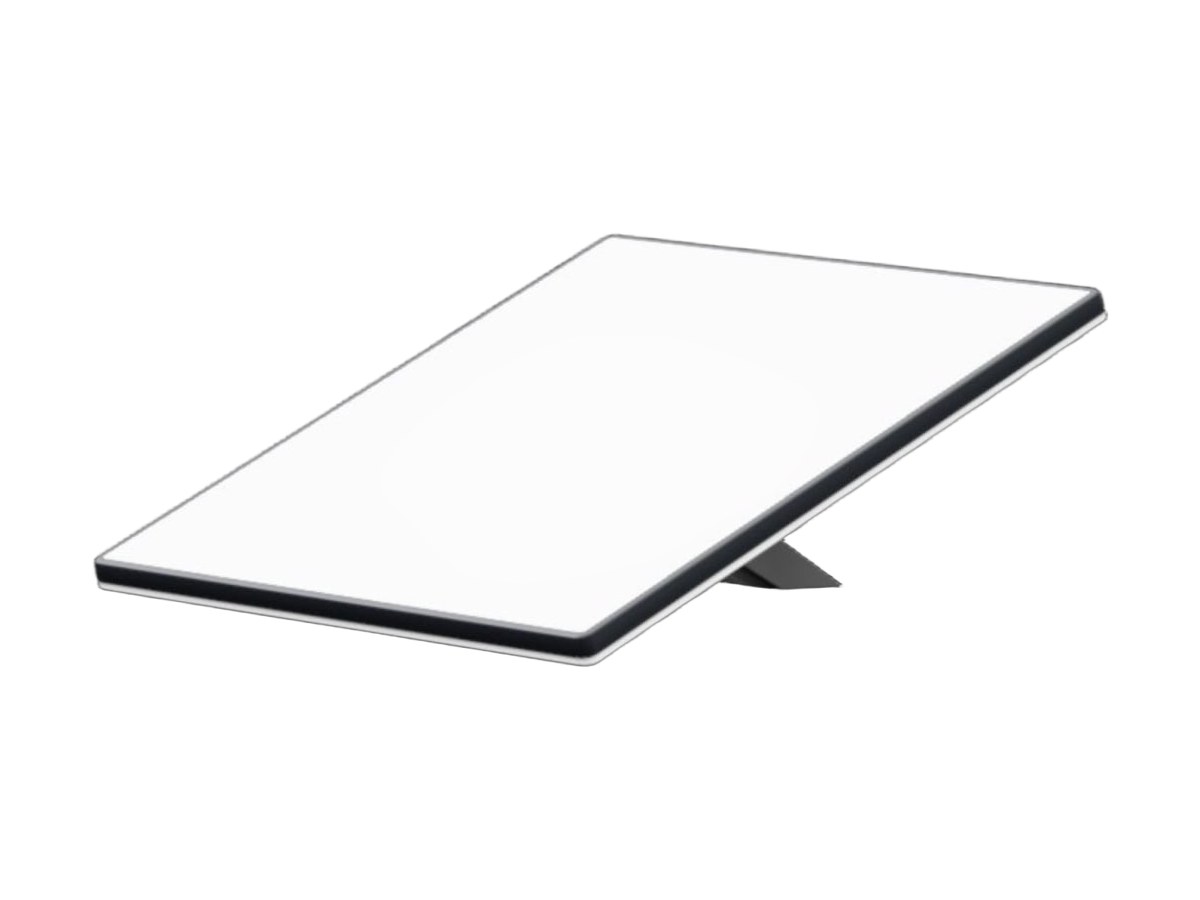
- Clear sky placement: use the kickstand or a mount; expect a short boot surge around ~60 W, then steady draw settles lower.
- Official Starlink Mini rating: average ~25–40 W. Australian field notes from early adopters often report closer to ~17–20 W steady in good conditions. We present runtime estimates at 20 W, 30 W, and 40 W to cover the range.
- Efficiency: assume ~85% usable Wh when feeding Mini via an AC inverter; DC direct is slightly better but harder to wire for most users.
Runtime estimates (not lab tests — treat as planning guides)
| Option | Capacity | Weight | Indicative AU cost | Usable Wh (~85%) | @20W | @30W | @40W | Best for |
|---|---|---|---|---|---|---|---|---|
| Anker SOLIX C1000 Gen 2 | ~1,024 Wh | ~11.3 kg | ~A$1,399 (Bunnings marketplace) | ~870 | ~43 h | ~29 h | ~22 h | Overnight / light camping Mini-only |
| Anker SOLIX S2000 | ~2,010 Wh | ~16.2 kg | A$1,399 launch | ~1,710 | ~85 h | ~57 h | ~43 h | Multi-day camp / Mini + fridge headroom |
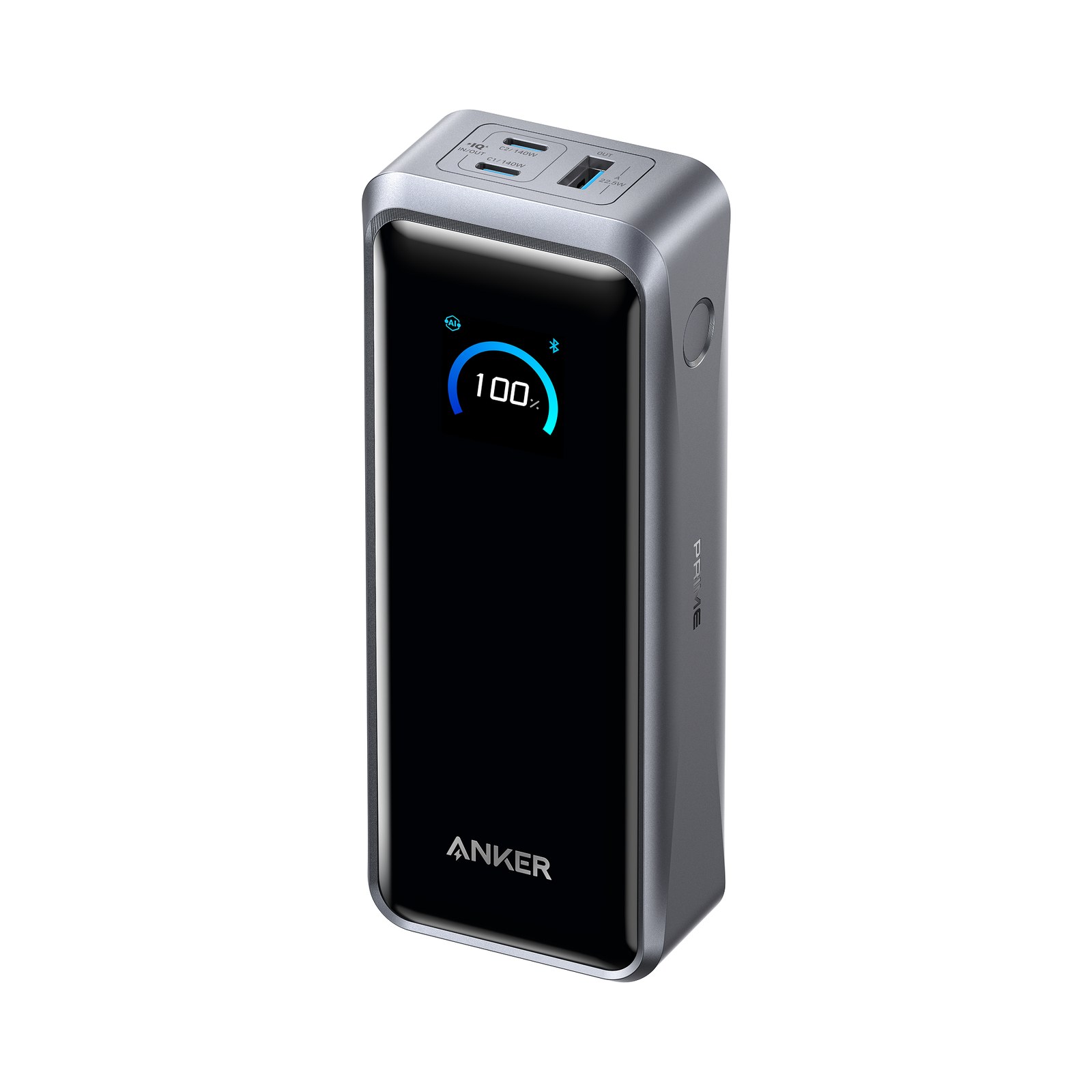
| Anker Prime Power Bank (26K, 300W) | ~26,250 mAh / ~99 Wh | ~600 g | ~A$299.99 (Anker AU, bank only) | ~85 | ~4 h | ~3 h | ~2 h | Short hike / mobile day (needs 100W PD) |
| Anker 737 (24K, 140W) | ~24,000 mAh / ~86 Wh | ~630 g | ~A$219.99 (Anker AU list; street often lower) | ~73 | ~3.5 h | ~2.5 h | ~2 h | Brief mobile only |
Prices as of early October 2026; marketplace and retail pricing moves frequently. Treat as indicative only.
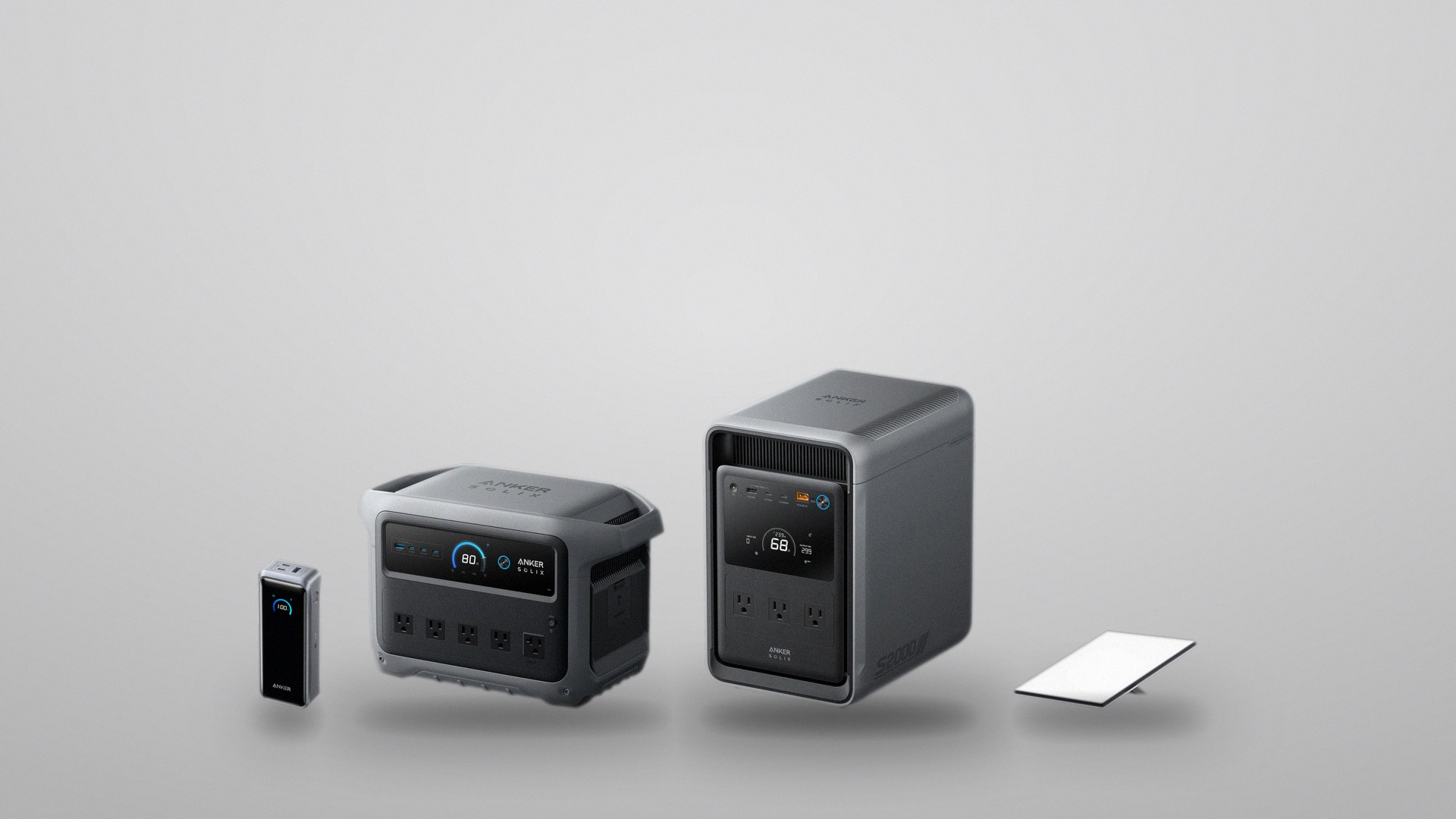
Studio size lineup (left to right): Anker Prime A110A, SOLIX C1000 Gen 2, SOLIX S2000, and Starlink Mini.
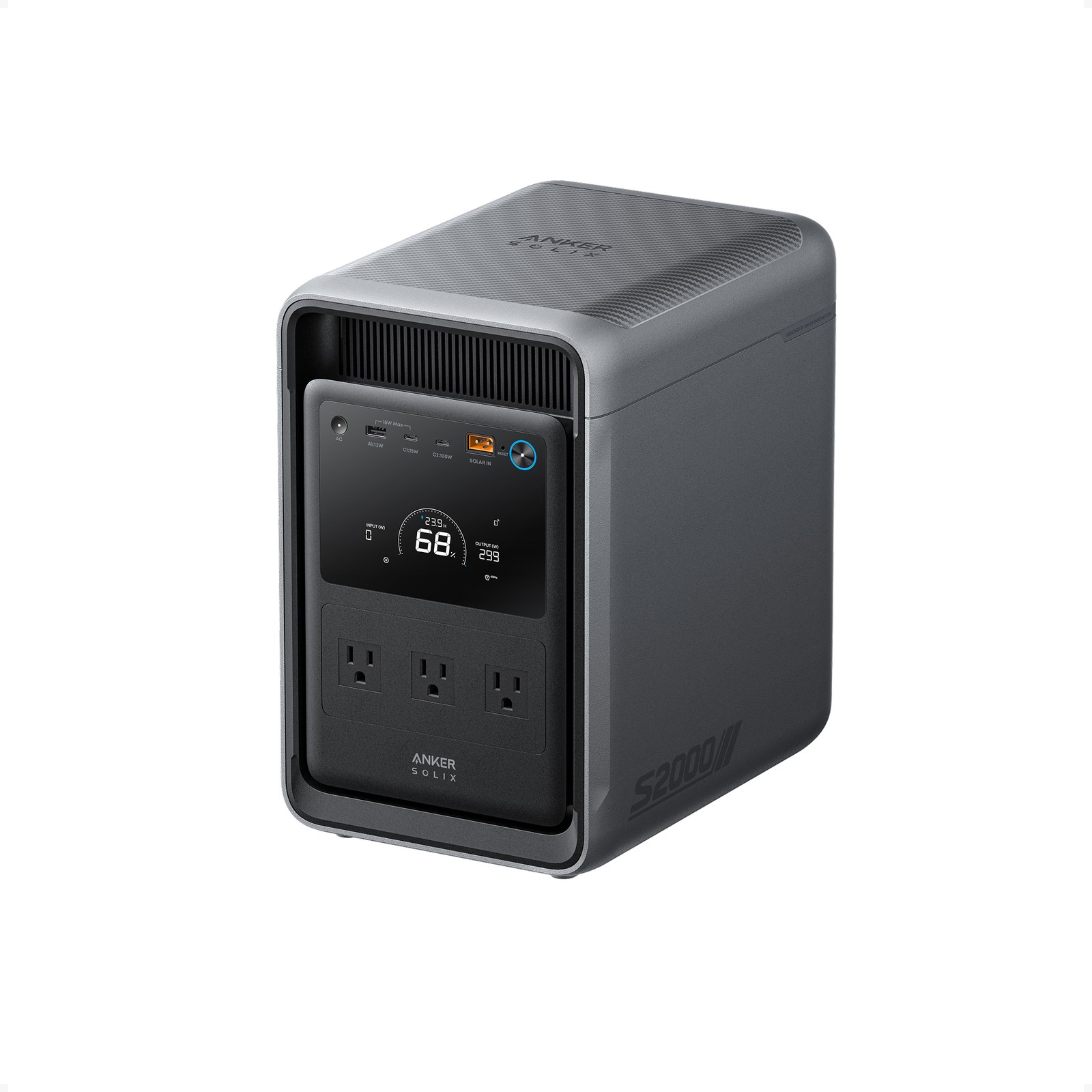
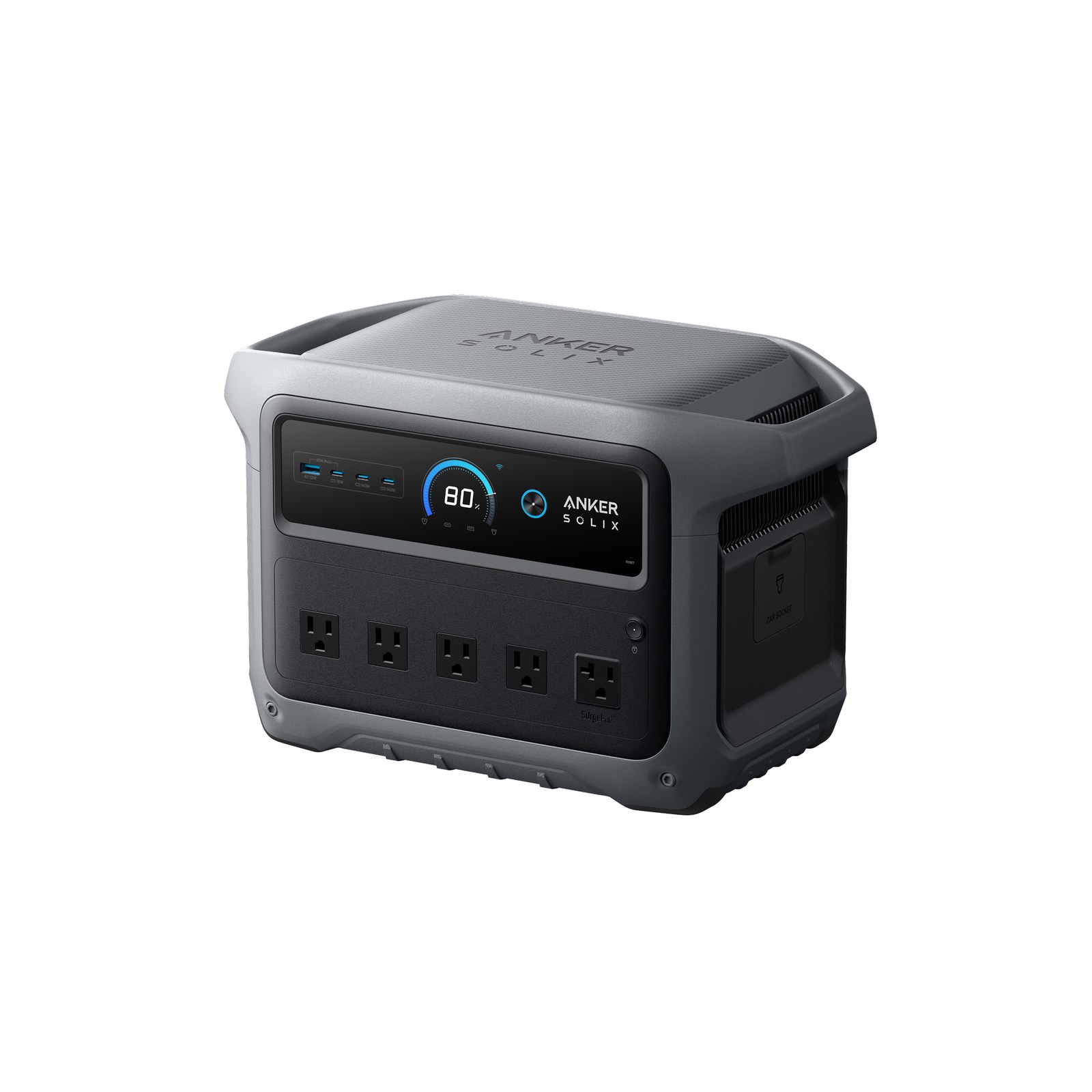
Official product packshots
Use-case guidance
Hiking / day mobile: pocket bank (Prime 26K or 737) only if you have Starlink's USB-C accessory cable and the bank delivers 100W PD. Runtime measured in hours, not days — good for a roadside stop, emergency comms, or a short bush walk where you need connectivity for a meeting or safety check-in.
Camping overnight (Mini-focused): the Anker SOLIX C1000 Gen 2 (~11.3 kg, ~1,024 Wh, non-expandable Gen 2, typically ~A$1,399 at Bunnings marketplace) gives you ~22–43 hours of Mini runtime depending on dish draw. If your camp load is just Starlink, phones, and a light or two, C1000 Gen 2 is the lighter overnight option compared to S2000.
Caravan / longer mobile (Mini + fridge + devices): the S2000 becomes the story — its ~2 kWh capacity and low idle efficiency support the fridge cycling, plus Starlink, plus phone charging and LED strips, without rationing watts. Still lighter than AC200L / Delta 2 Max / 2000 Plus rivals at ~16 kg.
Extended off-grid or home backup that includes Starlink: consider the expandable rivals (Bluetti AC200L with battery packs, EcoFlow Delta 2 Max, or Jackery 2000 Plus) from the comparison above if you need to scale capacity beyond 2 kWh or want high-watt solar recharge for week-long remote stays.
What we are not saying
These runtime figures are estimates based on manufacturer specs and published field reports — we have not completed hands-on lab testing with an AU retail Starlink Mini and each power option yet. Real-world draw varies with weather (rain/snow increases Mini power), obstructions, firmware, and whether you are actively streaming or idle. Treat the table as a planning baseline, not a guarantee.
We do not receive affiliate commissions from Anker, Starlink, or the rival manufacturers mentioned. When we finish runtime testing with an AU Starlink Mini unit, we will update this section with measured figures.
Bottom line
The Anker SOLIX S2000 AU launch is not "Bluetti but cheaper." It is a compact, efficiency-first 2 kWh station priced aggressively for Australia, with Early Access extras sweetening week-one buyers. Bluetti and peers still own raw watts, solar input, and expandability.
If your use case matches the S2000's strengths — light camping, caravan weekend, Starlink Mini field work — the published A$1,399 + Early Access pack is a strong value map on paper. If you need high continuous loads or modular capacity, pay up for AC200L / Delta 2 Max / 2000 Plus and skip the deal FOMO.
For Starlink Mini mobile power, the guidance is use-case driven: pocket banks (Prime 26K / 737) for hours-long mobile connectivity, C1000 Gen 2 for overnight Mini-focused camping, and S2000 when you also need to run a fridge and lights for days. The runtime table above gives you the planning baseline; actual draw will vary with conditions.
We will update this once we have hands-on AU runtime numbers (S2000 fridge days, real idle draw, charge times, and measured Starlink Mini power consumption across the battery options).
When to call for help
If you are rolling out power backup across a workshop, clinic, or retail site and want help choosing the right kit — or if you need a second opinion on hardware that actually fits your space and budget — that is where we come in. iWizz helps Australian SMEs choose practical tech, cut the waste, and set up workflows that stick.